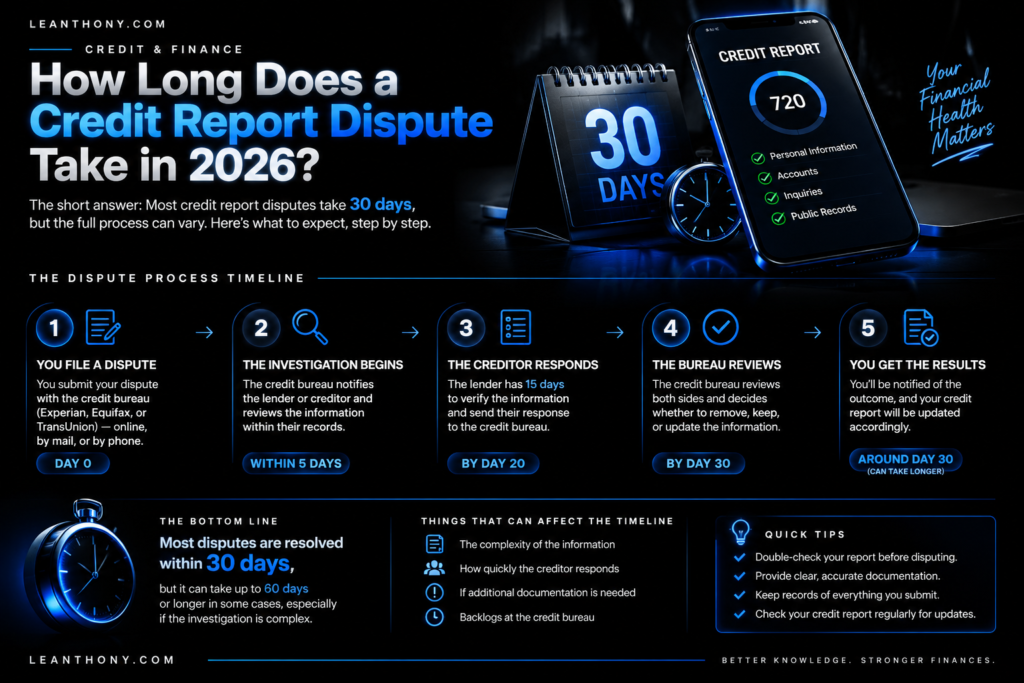
If you find incorrect information on your credit report, you probably want to know how quickly it can be fixed. In 2026, a credit report dispute generally takes 30 days to investigate, although certain circumstances allow the investigation to take up to 45 days.
The exact timeline depends on when you file your dispute, the information you provide, and the circumstances of your case. Understanding how the credit report dispute process works can help you track your request and know what to do if the error remains.
How Long Does a Credit Report Dispute Take?
Under federal law, credit reporting companies generally have 30 days to investigate a dispute after receiving it. In certain situations, the investigation period can extend to 45 days.
After completing the investigation, the credit reporting company generally has five business days to notify you of the results. You should receive an explanation of the outcome and, when applicable, an updated copy of your credit report.
Keep in mind that these deadlines cover the investigation and notification process. They do not guarantee that every correction will appear immediately across every credit reporting agency.
Credit Report Dispute Timeline in 2026
The following table summarizes the general deadlines for disputing an error on your credit report.
| Stage | General timeline |
|---|---|
| Investigation begins | After the credit bureau receives your dispute |
| Standard investigation | Generally 30 days |
| Extended investigation | Up to 45 days in certain circumstances |
| Notification of results | Generally within five business days after the investigation ends |
| Credit report correction | Depends on the investigation outcome and required updates |
These are general federal timelines, not a guarantee that every dispute will follow the same schedule.
Why Can a Credit Report Dispute Take 45 Days?
A credit report dispute may take up to 45 days in certain circumstances. For example, an extended period may apply if you dispute information after receiving your free annual credit report. It may also apply if you submit additional relevant information during the initial 30-day investigation period.
Providing complete information when you first file can make your claim easier to understand. However, even a well-documented dispute may require additional investigation if the credit bureau needs to contact the lender, credit card company, or debt collector that supplied the information.
What Happens During a Credit Report Dispute?
When you dispute a credit report error, the credit reporting company generally reviews your claim and forwards the relevant information to the business that reported the disputed item.
That business investigates the information and responds to the credit bureau. The investigation may result in the information being corrected, deleted, or verified as accurate.
For example, if your credit report incorrectly shows a late payment, you can provide account statements or payment confirmations to support your dispute. If the investigation confirms that the information is inaccurate, the responsible companies must take the appropriate steps to correct it.
Filing a dispute does not automatically remove an item or guarantee an increase in your credit score. The outcome depends on the evidence and investigation findings.
How Can You Help Your Credit Report Dispute Go More Smoothly?

To help avoid unnecessary delays, make your dispute as clear and specific as possible.
- Identify the exact account or information you believe is incorrect.
- Explain why the information is inaccurate or incomplete.
- Include copies of relevant statements, payment records, or other supporting documents.
- Keep a copy of your dispute and any confirmation number.
- Record the date you submitted your request.
You can generally dispute inaccurate information with the credit reporting company and the business that supplied it. The Consumer Financial Protection Bureau (CFPB) explains how to dispute errors and what supporting information to include.
What If Your Credit Report Dispute Takes Too Long?
If your dispute appears to be taking longer than expected, check its status through the credit bureau’s official website or contact the company directly. Review your submission date and any notices you received to determine whether an extended investigation period may apply.
If the applicable deadline has passed and your dispute remains unresolved, you may be able to submit a complaint to the CFPB. For complaints about inaccurate or incomplete credit report information, you generally must first dispute the information directly with the credit reporting agency and wait until the dispute is no longer pending or 45 days have elapsed, as applicable.
Does Disputing Your Credit Report Improve Your Credit Score?
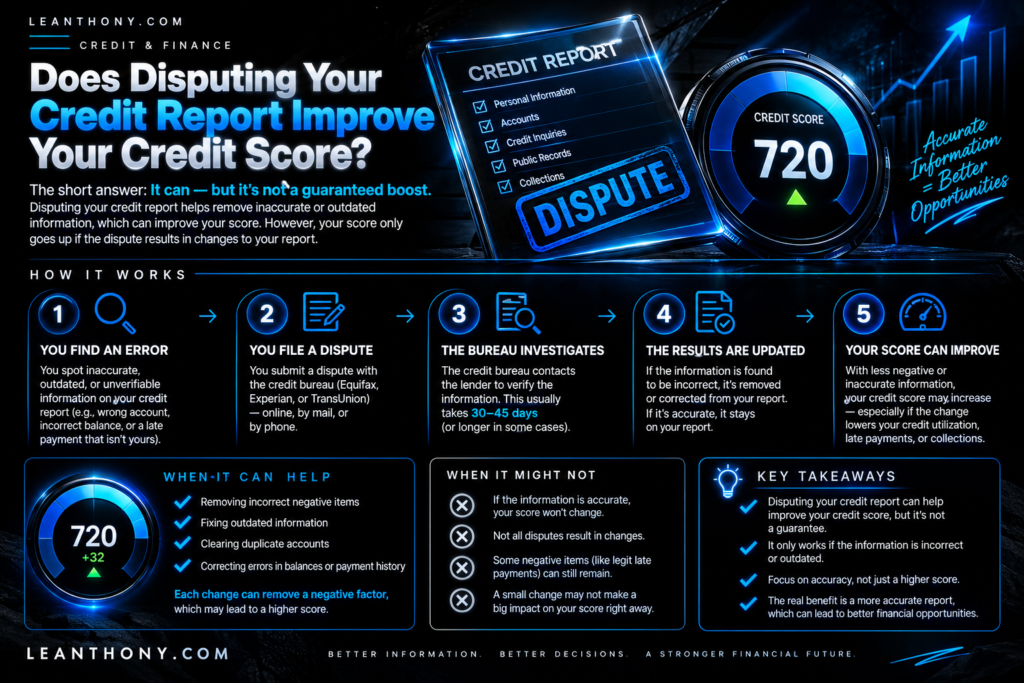
Disputing an error does not automatically improve your credit score. Your score may change if the investigation corrects or removes information that affects your credit history.
For example, correcting an incorrectly reported late payment could affect your score differently from correcting an outdated address. The purpose of a credit report dispute is to help ensure that your credit file is accurate, not to guarantee a particular score increase.
Final Answer: How Long Does a Credit Report Dispute Take in 2026?
Most credit report disputes generally have a 30-day investigation timeline, while certain cases can take up to 45 days. The credit reporting company generally must notify you of the results within five business days after completing its investigation.
To track your dispute, save your documents, check its status, and review the results carefully. If the information remains inaccurate, follow up with the credit bureau and consider your available options under federal consumer protection rules.
